
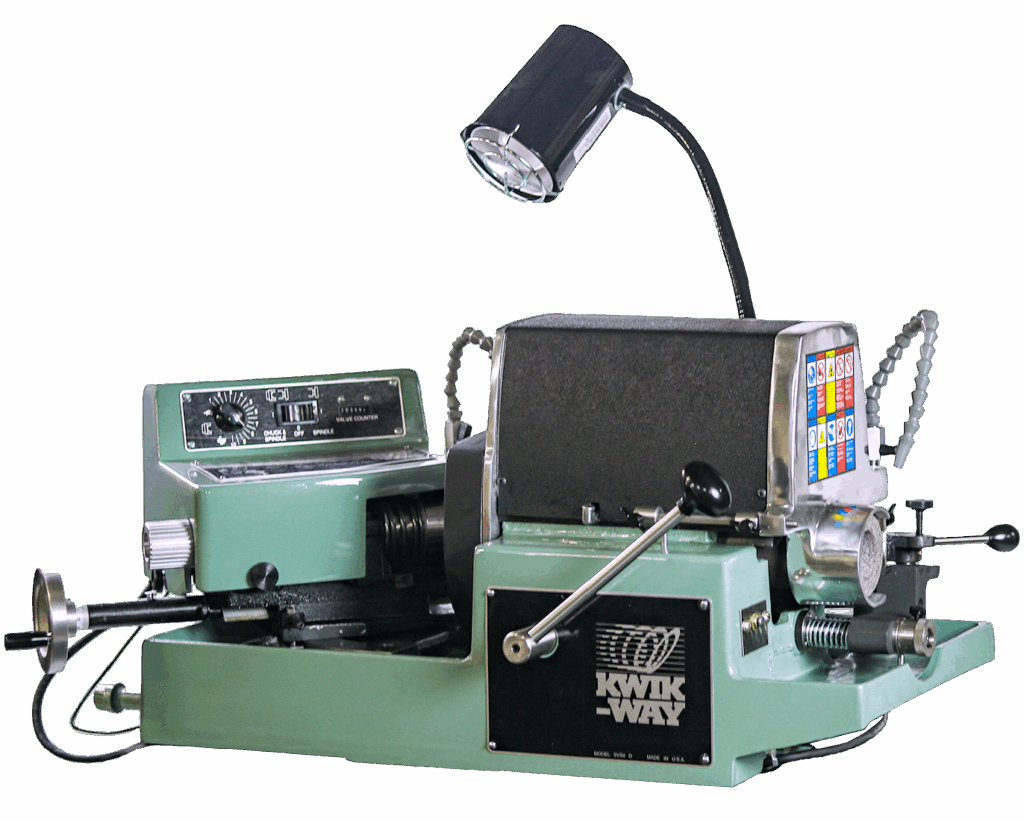
When shops compare valve refacers, the conversation almost always lands on motors, wheels, and footprint. But the single component that decides whether a reconditioned valve seals like new is the one most spec sheets gloss over: the chuck. On the Kwik-Way SVS-II Deluxe HP, that chuck is the whole story — and understanding how it works explains why this machine holds accuracy down to .0002″.
The Problem Every Valve Refacer Has to Solve
A brand-new valve is mechanically perfect: the face and the stem share the same centerline, so the face seats evenly against the seat. The trouble starts after thousands of heat cycles. Warping occurs in the part of the valve exposed to extreme heat — the head and the section of stem above the guide. The portion of the stem that actually rides inside the valve guide stays true.
That detail is the key to everything. To restore a valve so it seals correctly back in the engine, you have to grind the face concentric to that unworn section of stem — not to some averaged center. Grind it to the wrong reference and the face comes out eccentric, the valve seats unevenly, and you get leaks, hot spots, and burned valves down the road.
The Kwik-Way Principle: Centerline Chucking
Kwik-Way built its reputation on what it calls the Centerline System. Instead of gripping the valve by its tip or averaging its center like a collet or centerless machine, the Centerline System references the valve to the exact part of the stem that travels in the guide. That is the only surface that matters for sealing, and it is the only surface a Kwik-Way chuck grips.
The result is a valve face ground true to the stem the engine actually relies on — restoring the new-valve relationship between face and stem. Independent studies cited by Kwik-Way concluded that this approach grinds valves with greater accuracy than collet, conical-centering, or centerless chuck designs.
How the Six-Ball Chuck Actually Works
Here is the part that makes the SVS-II different from almost anything else on a shop floor. The chuck uses two sets of three precision balls — six in total — that close in on the valve stem at exactly the zone that runs in the guide. Because each set self-centers around the stem, the valve is automatically aligned to its true working centerline every time, with no collets to swap and no guesswork.
The chuck is air-activated: at the touch of a button it opens to its full diameter, so an operator can move from a small intake valve to a large diesel valve without stopping to change tooling. That single feature is why the SVS-II is so fast in a high-volume shop — you are not constantly fitting and re-fitting collets to match each stem size.
Standard chuck vs. High Performance (HP) chuck
The “HP” in SVS-II Deluxe HP refers to the High Performance Chuck. The standard six-ball chuck holds the valve face accurate to within .0005″ — already excellent. The HP chuck tightens that to .0002″, the level performance engine builders want for stainless, titanium, and hard-alloy racing valves. If your work runs heavily toward high-performance or exotic-material valves, the HP chuck is the upgrade that pays for itself.
Why the Chuck Design Shows Up in the Finish
Accuracy is only half the equation — surface finish is the other. The SVS-II drives its grinding wheel through a separate, belt-driven spindle that isolates motor vibration and harmonics from the work. That is what produces the smooth, chatter-free face Kwik-Way is known for. Pair the isolated spindle with the variable-speed chuck (adjustable from 100 to 300 RPM) and the operator can dial in the exact rotation speed for the material being cut, whether that is a soft OE valve or a hardened racing valve.
A few details round out why the machine stays accurate day after day: a 7″ vitrified valve wheel plus a 3″ stem wheel, a diamond dressing tool that pivots out of the way when not in use, and a coolant system that keeps temperatures stable so the stone lasts longer and the finish stays consistent.
The SVS-II Deluxe HP at a Glance
| Specification | Detail |
|---|---|
| Accuracy | .0005″ standard / .0002″ with HP chuck |
| Chuck type | Six-ball, air-activated, self-aligning |
| Stem capacity | .157″–.5625″ (4.0–14.3 mm); up to 21 mm w/ optional chuck |
| Valve head diameter | .750″–4″ (19–101.6 mm) |
| Chuck speed | Variable, 100–300 RPM |
| Grinding wheels | 7″ valve wheel + 3″ stem wheel |
| Standard features | Stem-end grinding, chamfering, rocker-arm grinding, diamond dresser |
| Warranty | 3-year |
Stem-end grinding, chamfering, and rocker-arm grinding all come standard — capabilities that some competing refacers treat as extra steps or add-ons. You can see the full configuration and request current pricing on the Kwik-Way SVS-II Deluxe HP product page.
Working a Smaller Budget? Consider the VG100
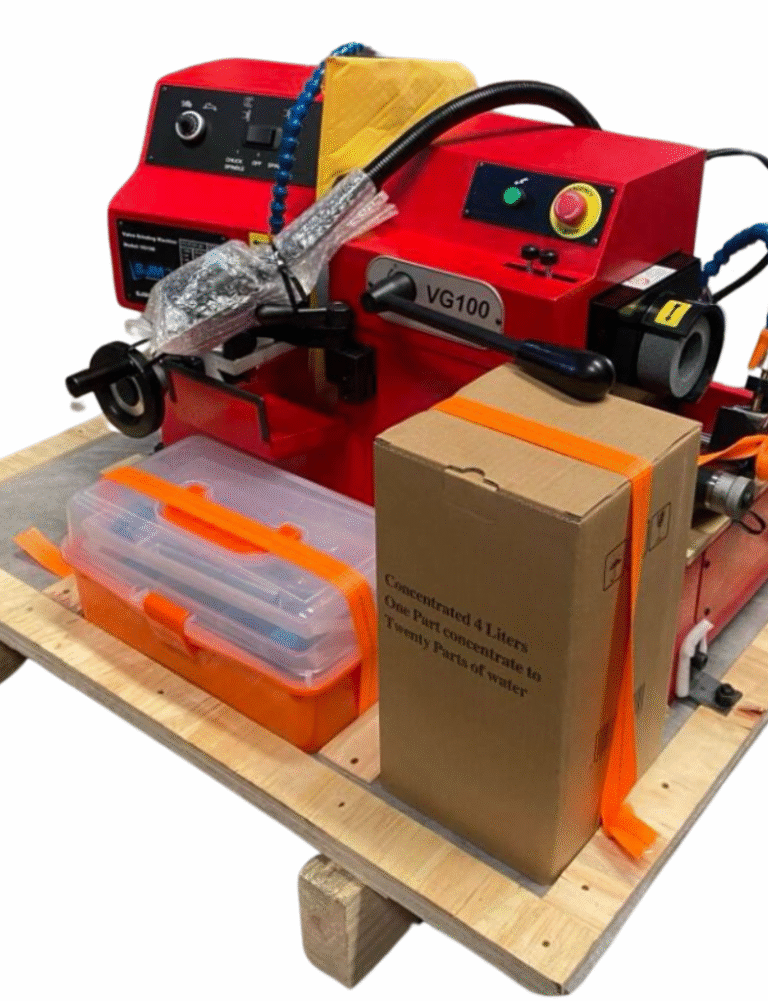
The SVS-II Deluxe HP is the choice when accuracy and throughput justify the investment. If you are setting up a shop or need a dependable refacer at a lower entry point, our VG100 Valve Refacer delivers precision valve grinding for automotive, diesel, and performance work at a more accessible price. Both machines are built to reface valves accurately — the right pick comes down to volume and the materials you run.
Why Shops Keep Coming Back to Kwik-Way
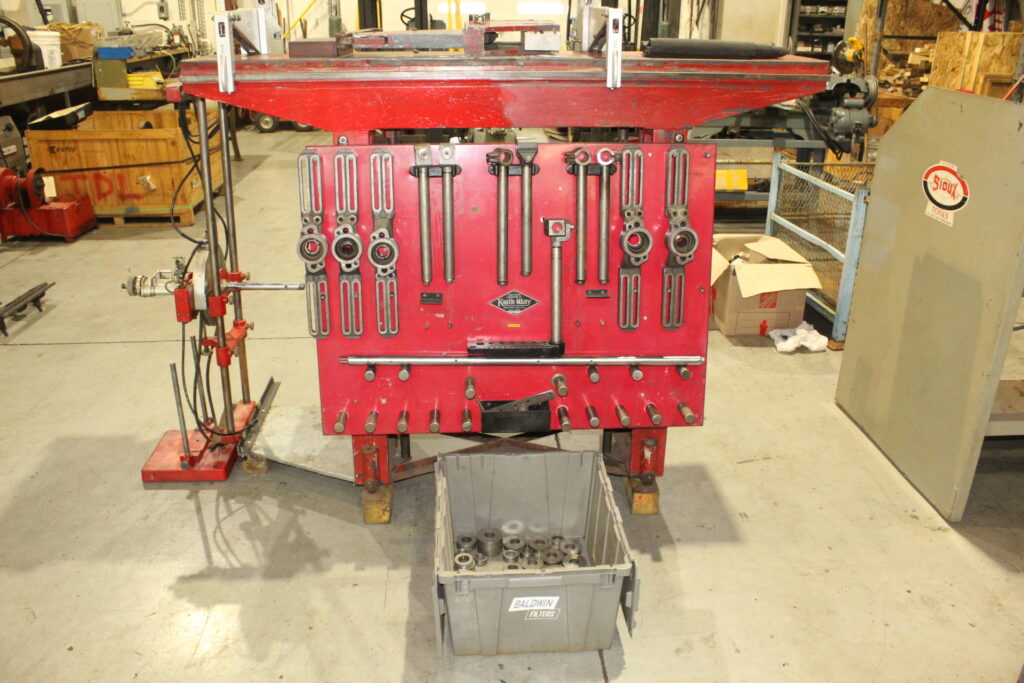
Kwik-Way has been a fixture in engine machining for generations, and the SVS-II is built to be the kind of machine a shop buys once. A heavy-duty cast base, industrial-grade components, and a three-year warranty back that up. The six-ball chuck is not a gimmick — it is a genuinely different approach to a problem every other refacer has to work around. That is why the Centerline System remains the benchmark for valve concentricity. Explore the rest of the lineup on our Kwik-Way equipment page.
Ready to put a six-ball chuck to work in your shop?
Tell us what you run and we’ll send a fast, accurate quote — no hidden fees, no obligation.